How Often Should You Wash Your Towels to Stay Clean and Fresh

When it comes to washing towels, frequency should be the one thing to keep in mind. The reason is that if you overwash towels, you’ll end up causing more damage rather than removing bacteria. So, you can contact a professional cleaner like Love2Laundry and have them wash your towels. This way, you can avoid a mountain of uncleaned towels.
We know what materials, techniques, and frequency are needed to wash towels and remove stubborn stains effectively. Our towel washing method will offer you the result you’re always looking for.
So, for more details, such as whether it’s suitable to wash towels in hot water, our reliable laundry service will provide you with the answer.
Why Towel Hygiene Matters More Than You Think
Towels may look clean from a distance, but they are among the most water-retentive items in your home. Every time you dry your body, towels absorb water, dead skin cells, oils, and product residues. This creates an incubator-like environment for microbes if towels are not washed and dried thoroughly. For that, you should have an effective method to wash your towels.
In humid climates, such as Pakistan’s, towels take longer to dry, especially after rain, because bathrooms lack proper ventilation. Dampness raises hygiene concerns, making it essential to wash towels regularly in daily home care, not just occasionally or rarely.
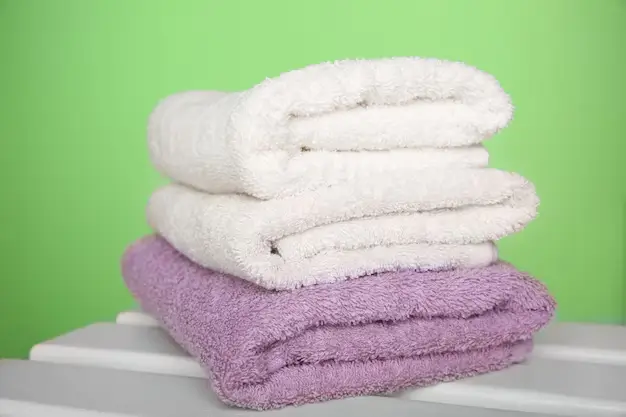
How Bacteria and Odors Build Up in Towels
If towels are left damp for most of the day, the bacteria and mildew can reproduce very quickly. These bacteria and fungi feed on moisture and organic matter trapped in the fabric. In time, this would lead to:
- Musty or sour smells that linger even after washing.
- Towels that feel stiff, rough, or sometimes slimy instead of soft.
- Reduced odor-removal performance, where detergent and fabric softener no longer work effectively.
- A faster return of odors after use, even when the towel looks clean.
Odors typically develop when towels are not fully dried, stored in humid spaces, or reused multiple times without washing. Proper washing and thorough drying break this cycle, helping maintain hygiene, softness, and long-lasting freshness.
How Often Should You Wash Your Towels?
With differences in preference, standard hygiene norms cite the following schedule on when washing should occur:
- Bath Towels: Every 3-4 Uses
- Hand Towels: Every 1-2 Days
- Face Towels: After 1-2 Uses
- Gym/Sport Towels: After 1 Use
These time ranges help reduce odor development and keep towels feeling fresh, especially in warmer climates. Follow these frequencies to wash your towels without causing further damage.
Does Usage Frequency Change the Washing Schedule?
The manner and intensity of use directly determine how often you wash your towels. You may have to wash your towels more often if:
- You take a shower multiple times a day,
- Members of the family are sharing towels,
- The towels are being used after workouts or outdoor activities, and
- The towels do not dry out completely between uses.
Washing towels once or twice after use is advisable and hygienic in these cases.
Factors That Affect Towel Washing Frequency
Towel washing isn’t a one-size-fits-all approach. Irrespective of a general guide, the absorption frequency would depend on lifestyle, environment, and how towels are typically used and stored. Understanding these nuances can help you achieve the maximum possible hygiene while preserving the lifespan of your towels.
Towel Type (Bath, Hand, Face, Gym)
Exclusively working for one purpose, towels come into contact with a different quantity of moisture or dirt regularly:
Bath Towels: Mostly placed on clean skin; absorb lots of moisture; okay to wash after 3 to 5 uses.
Hand Towels: Conceivably shared by multitudes of people with germs; thus, you should wash them more regularly.
Face Towels: Especially for sensitive skin; they must be washed very frequently for maximum freshness.
Gym Towels: They absorb the whole sweat and bacteria; they ought to be washed without exception after each use.
Basing your washing regime on the type of towel used maximizes cleanliness without overworking the fabric.
Also Read – Want to know what is hard water? Read our blog and get the details.
Climate and Humidity
In high-humidity regions, towels often take much longer to dry, creating ideal conditions for bacteria and mildew to grow. Moisture trapped within the fabric fibers allows odors to linger and freshness to fade, especially in coastal or humid climates where towels may take an entire day to dry, even when properly hung.
When a towel remains damp for hours or days, unpleasant odors can develop despite correct washing. Limited sunlight and poor air circulation only make the problem worse.
Personal Health and Skin Sensitivity
Under these conditions, personal health becomes an important indicator for how promptly towels should be washed. People who are unwell may not notice immediate or alarming effects from reusing the same towel once or twice, which can lead them to delay proper washing and deodorizing routines.
Over time, however, continued reuse allows odors, bacteria, and residues to accumulate, potentially prolonging discomfort and increasing the risk of irritation or reinfection. Maintaining clean towels helps reduce this buildup and supports better hygiene during recovery.
Also Read – Stressed from wasting extra water and energy consumption? Check out our blog on laundry practices to save water and energy for details.
Signs Your Towels Need Immediate Washing
Dirty towels show signs of cleaning, which can appear suddenly. For instance, if you wash towels in hot water, their texture will start to look dull. So, for more signs, check them out below.
- A musty/sour smell even when the towel looks clean.
- A sticky/rough feel upon drying.
- Perceived swatches/stains/marks that are light or not obvious at least.
- Feels damp for long hours.
Washing Towels After Illness or Heavy Use
It is therefore essential to wash towels promptly after situations like illness, heavy exercise, or activities that cause excessive sweating and salt buildup. These conditions leave behind residues that quickly lead to unpleasant odors. Regular washing restores freshness and balance, helping daily towels feel clean, comfortable, and hygienic.
Best Way to Wash Towels for Hygiene and Freshness
Washing towels properly ensures they remain soft, fresh, hygienic, and ready for daily use. Towels must always be shaken before use, indeed, to loosen trapped dust and moisture. Adding a laundry booster will improve the performance of your cleaning procedure.
Separate wash towels from regular clothes for proper cleaning and to prevent lint transfer. Do not overload the machine; towels need ample space to allow water and detergent to circulate through and rinse them thoroughly. Bleaching towels would also be effective, as they would remove yellow marks from the texture.
In case the fabric of your towel is thick and the stains are old, a laundry stripping process would work.
Ideal Water Temperature and Detergent Choice
Warm: for all general-purpose washing. Cleans but also preserves the fibers and colors of the towel.
Hot: once in a while, for towels that are used heavily, for gym towels, or after someone has been sick, to help eliminate bacteria and odors.
*Note: Overuse of detergent can trap residue in fabric, making the towel stiffer and smell unpleasant.
Drying Towels Properly to Prevent Odors
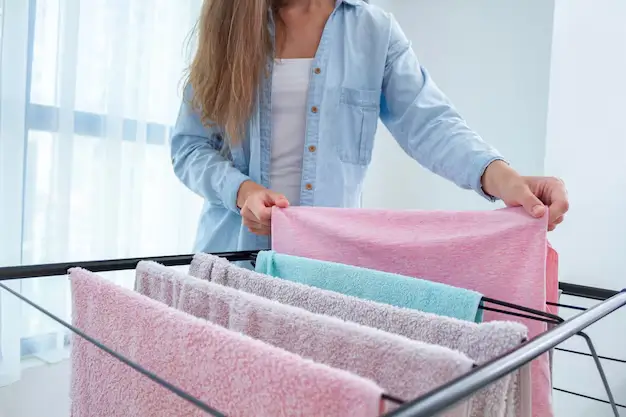
Drying is as good as washing towels. Musty smells and bacterial growth are strongly linked to damp towels. Tumble drying the towels is the most reliable method because it dries them quickly and evenly at medium to high heat. Air drying works very well in open places with good ventilation; towels need to be dry before folding or storing.
Never keep or leave damp towels in the laundry basket or in the bathroom. They must be completely dry before use or stashing away, keeping towels fresh and odorless.
How Professional Laundry and Dry Cleaning Helps Maintain Towel Quality
After repeated home washing, towels may still retain lingering odors, detergent residue, or bacteria deep within the fibers. Professional laundry and dry cleaning services like Love2Laundry use specialized, thorough, and consistent cleaning methods that help eliminate these issues and extend the life of your towels. For more information or expert care, feel free to contact us anytime.
We provide our customers with quality service, thorough cleaning, odor elimination, and fabric care, making it a convenient way to clean those rather effort-intensive towels and keep them fresh and hygienic. Moreover, our pricing structure offers multiple plans that are cost-effective and cater to customers’ requirements.
So, book now and let our professionals take care of your uncleaned towels.
Why Choose Love2Laundry for Towel Care
This option brings with it the following advantages for towel care:
- Adhering to the highest hygiene standards, which guarantee deep cleaning and freshness.
- Fabric-safe cleaning methods that protect softness and absorbency.
- Time-saving convenience with professional handling from wash to finish.
- More effective at dealing with odors and buildup than home washing.
- Keeps towels cleaner, fresher, and more comfortable for longer.
How Often Should You Replace Your Towels?
Most towels should be replaced after 1 to 2 years, depending on how much use and washing they have undergone. Over time, towel fibers naturally wear down, even when cared for well.
Some signals to know your towels need replacing:
- Lower absorption, even after washing.
- Bad smells that stick around.
- Upsetting material.
- Visible fraying or loose threads.
FAQs – How Often Should You Wash Your Towels
Do towels hold bacteria even after being washed?
Your towel might still contain bacteria even after washing if the procedure is improper or incomplete. It could be due to using cold water, to an overloaded washing machine, or to an incorrect amount of detergent.
Are you supposed to wash towels alone?
It would be better to wash the towels separately rather than cleaning them with clothes. The reason is that towels are thick and produce lint, which can stick to your clothes and reduce the effectiveness of your washing procedure.
Why does a towel smell bad even after washing?
The reason towels smell bad even after washing is due to detergent residues and trapped moisture. Using too much detergent and less water is the reason for this problem.
Keep Your Towels Clean, Fresh, and Long-Lasting
Now that you know the correct way to wash your towels, you can prevent hurdles and deal with stubborn stains easily. Whether it’s residue buildup or bacteria, your towels will look spotless after following the right cleaning method.
Moreover, reading the instructions on the label will help you decide whether you can wash towels in hot water or not. This way, there won’t be a risk of damage, such as shrinking or fading.