How to Remove Lint From Clothes: Genius Tricks for a Flawless, Fresh-Looking Finish
Few things ruin a sharp outfit faster than a layer of fuzzy debris. You carefully choose the perfect ensemble, only to find your black trousers covered in lint. Lint is a frustrating issue that makes even high-quality garments look neglected. It often shows up as stubborn white spots on black clothes after washing, leaving many people dissatisfied with their laundry results. Knowing how to remove lint from clothes is a vital skill for anyone who wants to keep their wardrobe looking polished.
While a sticky roller is the most common tool, it’s not the only solution. Relying solely on adhesive paper can be costly and less effective for larger items. To achieve a truly flawless finish, you need a combination of mechanical removal and preventive measures. This guide will show you the best ways to remove lint from clothes at home while keeping your fabrics safe from damage. From simple pantry staples to professional dry-cleaning secrets, we’ll cover all aspects of fiber care. To effectively remove lint, it’s important to understand why it happens and how to prevent it before it starts. Let’s dive into the science behind fuzz and discover the best tricks for keeping your wardrobe looking fresh.
What Is Lint and Why Does It Stick to Clothes?
Lint is made up of tiny textile fibers that break away from fabrics. When you wear or wash your clothes, friction causes these microscopic threads to snap and detach. Because these fibers are so light, they easily become airborne or migrate from one garment to another during a wash cycle.
The main reason these particles stick so stubbornly is static electricity. When fabrics rub together, especially in dry environments like a tumble dryer, they exchange electrons, creating an electrostatic charge. This charge acts like a magnet, pulling loose fibers toward the surface of your clothing. Synthetic materials like polyester and nylon are particularly prone to static, while natural fibers like cotton tend to shed more easily.
Common Causes of Lint Buildup in Laundry
A major cause of lint buildup is improper sorting. For example, washing a high-shedding item, like a new bath towel, with ‘lint-attracting’ fabrics such as corduroy or dark denim can result in lint transfer. The loose cotton fibers from the towel can embed themselves into the weave of darker clothes.
Overloading the washing machine also contributes to lint buildup. When the washer is too full, clothes can’t move freely, causing loose fibers to get trapped between garment folds instead of being rinsed away. A dirty washing machine can also redistribute old debris onto your fresh laundry. If you notice white spots on black clothes after washing, it’s likely due to fiber shedding or undissolved detergent. While dryer sheets can help reduce static, they won’t fix the issue if your washing machine is already filled with loose fibers.
How to Remove Lint From Clothes at Home (Easy & Effective Methods)
You don’t need an industrial setup to get professional results. Most people reach for a standard lint remover, but there are several alternative methods that work just as well, if not better. The key is to lift the fibers without causing extra friction, which can create more lint. Here’s a breakdown of the most reliable DIY techniques to remove lint using items you probably already have in your junk drawer or laundry room.
Use a Lint Roller or Fabric Brush
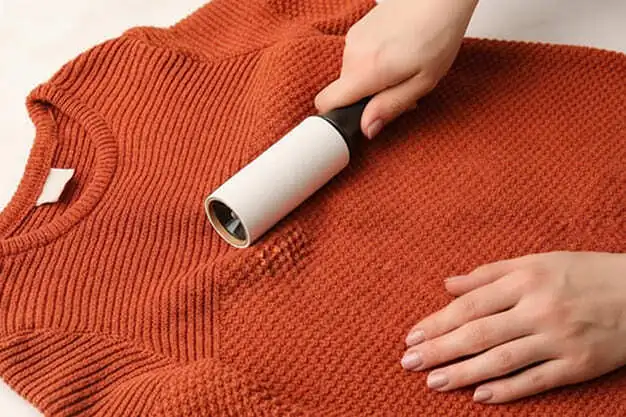
A classic lint roller is the most direct tool for the job. You simply peel off the used lint roller sheets to reveal a fresh adhesive surface and roll it over the fabric. For heavier materials like wool coats, a dedicated fabric brush is often superior. Its stiff bristles lift fibers deeply embedded in the fabric, making it one of the best ways to remove lint from winter wear.
Try Masking Tape or Packing Tape for Quick Fixes
If you need to remove lint from clothes without a roller, look for heavy-duty tape. Packing tape is particularly effective because of its width. Simply wrap the tape around your hand with the sticky side facing out. Pat the fabric firmly and lift. This method is incredibly fast for covering large areas like the back of a blazer or a sofa cushion.
Toss Clothes in the Dryer on Air-Only Mode
If your garment is covered in fine fuzz, the dryer can help remove lint. Use the ‘Air-Only’ or ‘Fluff’ setting for about ten minutes. The tumbling action, combined with the airflow, pulls particles into the lint trap. Adding wool dryer balls can further enhance this process, removing even more lint from the fabric.
Use a Damp Microfiber Cloth for Delicate Fabrics
For delicate fabrics like silk or thin synthetics, tape may be too harsh. A damp microfiber cloth is a great way to remove lint without causing damage from a lint roller. The tiny hooks in the microfiber cloth capture lint, while the moisture helps neutralize the static charge. This gentle yet effective method is ideal for your most delicate garments.
Professional Laundry & Dry Cleaning Methods That Remove Lint Effectively
Professionals use specialized tools that surpass what’s available in stores. High-pressure steam is one of the most effective ways to remove lint from clothes. It relaxes the fibers and neutralizes the static that holds lint in place. Once the static is gone, professionals use high-velocity air vacuums to remove debris.
Dry cleaners also use chemical ‘sours’ or conditioners to coat the fibers, making them slicker and less likely to attract lint. If your coat is a permanent lint magnet, a professional treatment can create a barrier that repels dust and hair for weeks.
Lint vs. Fabric Pilling – Know the Difference
It’s important to know the difference between lint and pilling. Lint is ‘extrinsic’—it comes from outside sources or loose fibers resting on the fabric’s surface, and you can easily brush it off. Pilling, on the other hand, is ‘intrinsic.’ It happens when the fibers in the garment itself twist and knot together, forming small, hard balls.
You can’t remove pilling with a lint roller. It requires a fabric shaver or sweater stone to cut the knots away. If you pull pills off by hand, you’ll often pull more fibers out, leading to more pilling later. Understanding the difference helps you choose the right clothes lint remover tool for the job.
Lint Removal Methods You Should Avoid
Never use a pumice stone on delicate fabrics like silk or athletic wear. While great for heavy wool, it will shred thinner materials. Similarly, avoid using “pet hair” specific vacuum attachments directly on expensive clothing. The suction is often too high and can stretch the garment out of shape.
Also, be wary of using cheap, low-quality razors to shave. If the blade is dull or the fabric isn’t perfectly flat, you risk cutting a hole in your clothes. Always test any new method on a hidden inside seam first.
How to Prevent Lint From Sticking to Clothes in the First Place
The key to a lint-free life is prevention. If you manage your laundry process correctly, you won’t have to spend twenty minutes rolling lint off your clothes before you leave the house. By following simple lint removal tips during the washing phase, you can save hours of work later. To truly prevent lint buildup, you need to stop shedding fibers from transferring to fabrics that attract them.
Sort Clothes by Fabric Type and Color
This is the most critical step. Separate your towels and fleece sweaters from your dark cotton shirts. This prevents light-colored fibers from transferring to dark surfaces. Sorting by color also helps you spot how to prevent clothes from fading early on.
Turn Clothes Inside Out Before Washing
By turning garments inside out, you ensure that any lint generated during the wash cycle stays on the inside of the clothes. This is the best way to remove lint from clothes at home without any extra tools. It also protects the fabric’s outer finish from the machine’s harsh agitation.
Clean the Washer and Dryer Lint Filter Regularly
A clogged filter can’t do its job properly. If the dryer trap is full, the lint has nowhere to go but back onto your clothes, often causing those annoying white spots on dark clothes after drying. Make it a habit to clean the lint trap before every load.
Choose Gentle Wash and Low-Heat Drying Settings
High heat and aggressive spinning break down fibers faster, leading to more lint. By using a gentle cycle, you reduce the friction that causes lint buildup. Additionally, you may want to look into how hard water affects fiber breakage in your area.
When to Choose Professional Laundry and Dry Cleaning Services
Sometimes, DIY methods aren’t enough. If you have a vintage velvet piece or a delicate wool suit, home treatments may cause damage. Professional cleaners have the expertise to handle high-maintenance fabrics without risk. You can check the pricing online to see if it fits your budget. For high-value items, it is always safer to contact us to get further details regarding the service.
FAQs – Remove Lint From Clothes
Why do my clothes still have lint after washing?
Tiny fibers often get trapped in the wash water and settle on fabrics as the machine drains. This happens most often when the load is too large or the filter is dirty.
Can you rewash clothes to remove lint?
Yes, running a short cycle with a cup of white vinegar can help release the debris. The vinegar breaks the static bond and flushes the loose fibers away.
Can vinegar remove lint from clothes?
It acts as a natural softener that prevents static, making the fibers less likely to stick. It is a great way to remove lint from clothes without roller tools during the rinse.
Keep Your Clothes Lint-Free and Looking New
Managing your wardrobe requires more than just a quick wash and dry. Learning to remove lint from clothes is essential to garment longevity. When you take the time to sort your loads and maintain your machines, you prevent the friction that causes fiber breakdown. If you find yourself constantly fighting fuzz, remember that the best way toremove lint from clothes without rollers is often a combination of the right tools and better laundry habits.
Don’t let lint ruin your professional image. Whether using lint roller sheets for a quick fix or deep-cleaning your dryer, consistency is key. You might also want to learn about the truth behind fabric softener and how it can sometimes make lint stickier. By following these lint removal tips, you can keep your outfits fresh and crisp every day. If stubborn lint buildup becomes overwhelming, don’t hesitate to seek professional help to remove lint safely. Your clothes are an investment. Treat them with the care they deserve for a flawless finish.